If you’re living with diabetes, you’ve probably heard plenty of advice about what not to eat — no sweets, no white rice, no fried food. But what about the foods that actually help you manage your blood sugar better?
The truth is, our traditional Indian diet is filled with ingredients that naturally support good sugar control. They’ve been part of our kitchens for generations — we’ve just forgotten how powerful they really are.
Here are five simple, easily available Indian foods that every diabetic should eat more often.
1. Bitter Gourd (Karela)
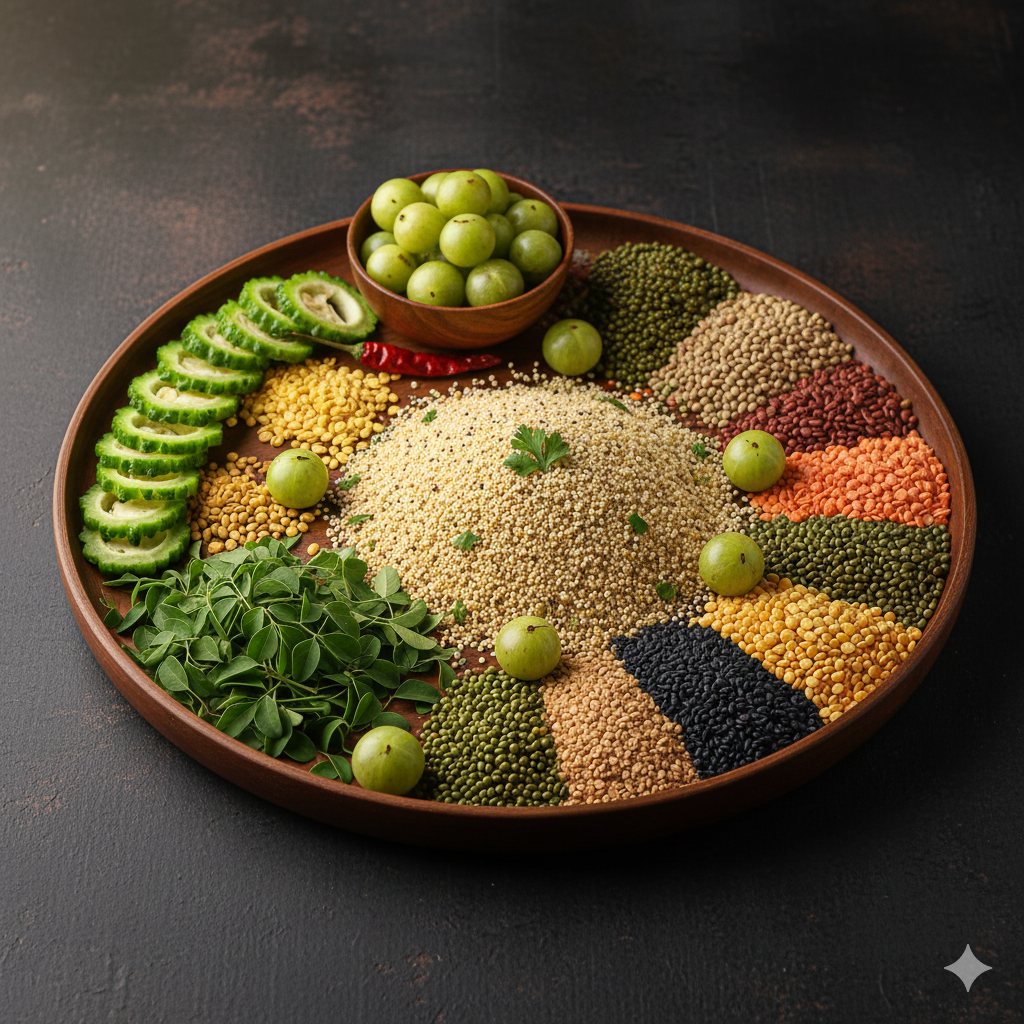
It may not be everyone’s favourite vegetable, but karela is one of the most powerful natural foods for diabetes management. Bitter gourd is packed with compounds that mimic insulin and help lower blood sugar levels.
It also improves how your body uses glucose and reduces cravings for sweets. Regular intake can make a visible difference in sugar readings over time.
How to include it:
If you can handle the taste, drink a small glass of karela juice on an empty stomach two or three times a week. Or cook it in a stir-fry with onions, or stuffed with spices. Roasted karela chips are another diabetic-friendly option that’s surprisingly tasty.
2. Fenugreek (Methi Seeds)
Methi seeds are tiny but mighty. They slow down the absorption of sugar in your intestines and improve insulin sensitivity. They also help reduce bad cholesterol — an added bonus for heart health.
How to include it:
Soak a teaspoon of methi seeds in water overnight and drink the water in the morning. You can also add the seeds to curries, dals, or parathas. Fresh methi leaves are equally beneficial — add them to rotis or make methi theplas for a healthy twist.
3. Millets
Our grandmothers knew it all along — millets like jowar, bajra, ragi, and foxtail millet are far better than polished white rice. They’re rich in fiber, slow to digest, and keep blood sugar levels steady.
Millets also contain important minerals like magnesium and iron that help your body use insulin better.
How to include it:
Start small — replace one meal a day with millet. Ragi dosa, jowar rotis, or bajra khichdi are all delicious ways to make the switch. If you like porridge, try ragi malt — it’s filling and keeps your energy stable for hours.
4. Indian Gooseberry (Amla)
Amla is a powerhouse of vitamin C and antioxidants that protect your cells from damage caused by high blood sugar. It also supports the pancreas — the organ responsible for insulin production.
Amla improves digestion, strengthens immunity, and helps reduce fatigue — all common issues in people managing diabetes.
How to include it:
Eat one fresh amla daily if available. You can also drink amla juice mixed with a bit of water or take it as a chutney or pickle. Even dried amla powder with warm water in the morning can make a difference.
5. Lentils and Pulses (Dal)
Lentils are one of the best sources of plant-based protein and fiber. They slow down sugar absorption and help you feel full longer — which means fewer cravings and better portion control.
From moong dal to masoor, to rajma and chana, all pulses are excellent for blood sugar balance when cooked the right way.
How to include it:
Enjoy a bowl of dal with brown rice or roti for lunch or dinner. You can also make sprouted moong salad, chana chaat, or add pulses to soups and khichdi.
A Final Word
Managing diabetes isn’t about giving up your favourite foods — it’s about choosing better ones. Our Indian kitchens already have everything needed for good sugar control. You just have to bring these traditional foods back to your plate.
With small, consistent changes — like switching to millets, drinking karela juice, or sprinkling methi seeds in your meals — you can enjoy your food and protect your health.
After all, eating well is one of the best medicines for diabetes.
What Indian foods have helped you manage your blood sugar better?
Share your thoughts or favourite recipes in the comments — someone else might find inspiration in your kitchen!