Crossing 50 feels like entering a new chapter. We still feel young at heart, we still enjoy our routines, and we still think we can push through tiredness the way we did in our 30s. But the body starts sending gentle reminders—slower mornings, stiffer joints, deeper sighs at the end of the day, a belly that doesn’t listen anymore, and sleep that plays hide-and-seek.
It’s not weakness. It’s wisdom from the body.
At this age, health stops being a background activity and becomes something that deserves attention. Not fear, not worry—just awareness. A few simple check-ups done regularly can help us stay strong, steady, and active for decades to come.
That’s why choosing the right tests is important. These are not “doctor’s orders.” These are tools to help us protect our energy, our mobility, and our peace of mind.
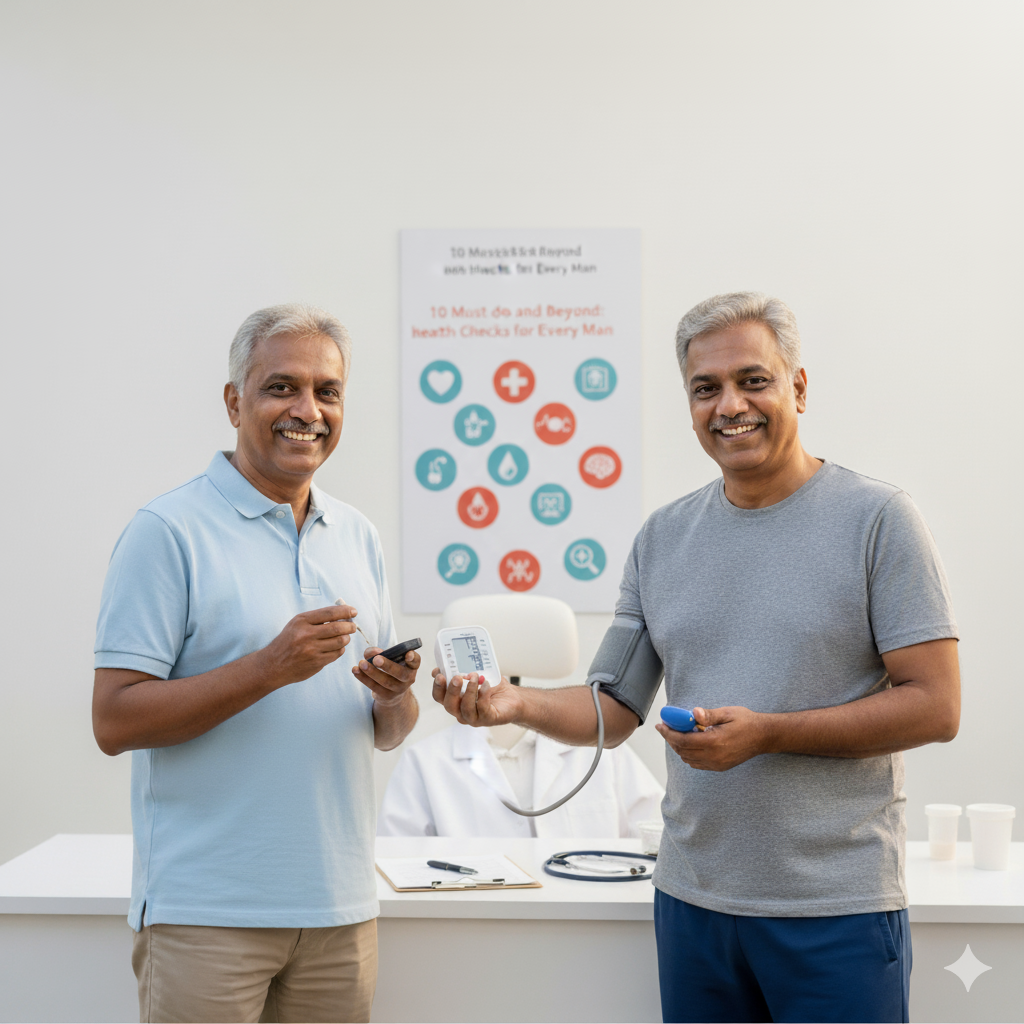
Here are the 10 must-do health checks every man above 50 should make part of his yearly routine.
1. Blood Pressure Check — Because the Heart Deserves Peace
High blood pressure rarely announces itself. It doesn’t cause pain or discomfort in the beginning. It just quietly builds up over time.
But the effects can be serious—heart strain, stroke risk, and kidney pressure.
Many Indian men in their 50s live busy, stressful lives with long commutes, irregular sleep, and high-salt diets. All of this adds up.
A simple BP check takes one minute but gives us a picture that could save our life.
How often:
Every 3 months—or monthly if BP is already high.
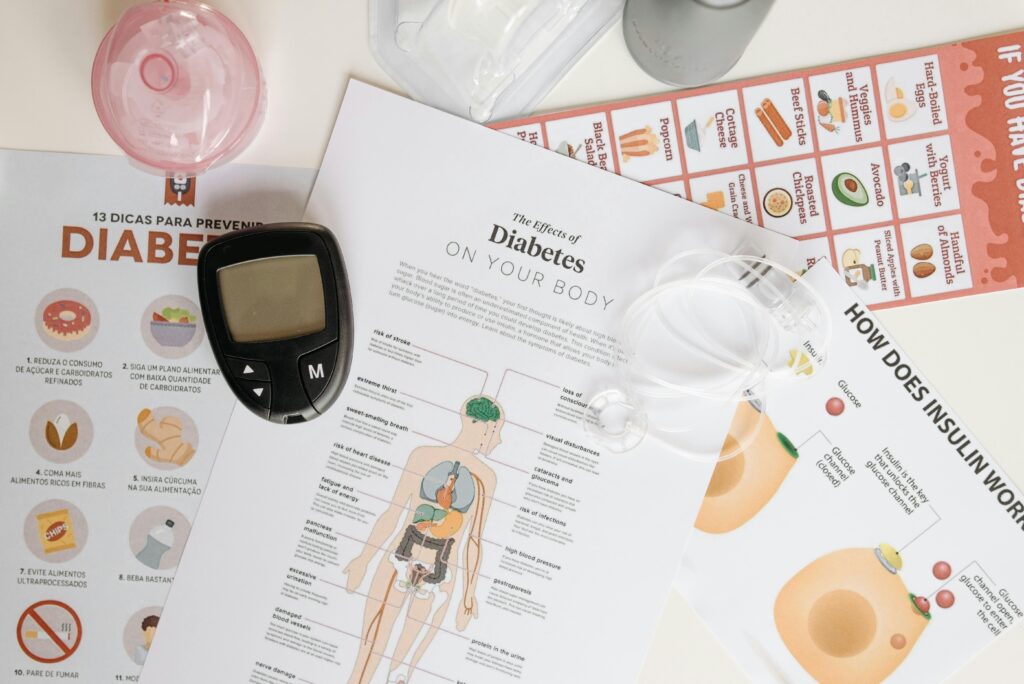
2. Blood Sugar Test & HbA1c — Stay Ahead of Diabetes
Diabetes in India is so common that many people assume it’s normal. But high sugar silently affects the eyes, kidneys, nerves, and heart—especially as we age.
A one-time fasting sugar test is useful, but the HbA1c test is even more important because it shows how our sugar has behaved over the last 3 months.
This one test alone can prevent years of complications.
How often:
Every 6 months.
Every 3 months if already diabetic or borderline.
3. Lipid Profile — A Clear Look at Our Cholesterol Story
Cholesterol is not the villain. Imbalance is.
After 50, metabolism slows. The same foods we enjoyed earlier—fried snacks, sweets, heavy dinners—start affecting cholesterol faster.
A lipid profile tells us:
- LDL (the bad cholesterol)
- HDL (the good cholesterol)
- Triglycerides
- Total cholesterol
Knowing these numbers helps us protect the heart before problems begin.
How often:
Once a year.
4. ECG & Stress Test — Checking the Heart’s Strength
Heart issues in men often build silently. Blockages don’t always show symptoms in the early stages.
An ECG shows the heart’s rhythm.
A stress test tells us how the heart behaves under effort.
Together, they catch early warning signs—especially helpful for men with a heavy stomach, long-term stress, diabetes, or a family history of cardiac problems.
How often:
Once a year or as advised.
5. PSA Test — Taking Care of the Prostate
After 50, prostate enlargement becomes common. This is why many men suddenly notice changes like:
- frequent urination
- weak flow
- difficulty starting
- waking up at night to use the washroom
Most prostate issues are harmless. But checking PSA (Prostate-Specific Antigen) helps catch any concerning changes early.
How often:
Once a year after 50.
6. Kidney Function Test — Keeping the Body’s Filters Healthy
Our kidneys are always working in the background, filtering toxins and balancing body fluids. As we age, the kidneys naturally slow down. Diabetes and BP make this even more important to monitor.
Kidney tests show how well the kidneys are filtering blood and whether there is early strain.
Early detection prevents long-term complications.
How often:
Once a year.
Every 6 months for diabetics or those with high BP.
7. Liver Function Test — Especially Important for Indian Men
Many Indian men have fatty liver due to:
- high-carb meals
- sweets
- alcohol
- long sitting hours
- belly fat
Most people don’t feel symptoms until the condition has progressed. A simple blood test can show how the liver is doing and whether lifestyle adjustments are needed.
How often:
Once a year.
8. Eye Examination — Not Just for Vision
Eyes change sharply after 50. Even if we see “perfectly,” problems may be developing at the back of the eye.
Regular eye tests help detect:
- cataracts
- glaucoma
- diabetic eye damage
- dry eye issues
Catching changes early prevents serious vision problems later.
How often:
Every year
Every 6 months if diabetic
9. Bone Density Scan — Building Protection Against Falls
We often think bone loss only affects women. Not true.
Men lose bone density too—just a little slower. After 50, weakness in the bones increases the risk of fractures from even a small slip.
A bone density scan shows whether our bones are thinning and whether we need calcium, vitamin D, or weight-bearing exercises.
Strong bones mean strong daily living.
How often:
Once every 2 years.
Yearly if there is a history of fractures.
10. Vitamin D & B12 Levels — The Most Ignored Tests in India
Even with sunlight around us, many Indian men have low Vitamin D.
And Vitamin B12 deficiency is extremely common due to long-term acidity medicines, low dairy intake, and ageing.
Low D and B12 cause:
- body pain
- fatigue
- weak bones
- mood changes
- low energy
- poor sleep
- memory issues
These deficiencies are easy to treat once identified.
How often:
Once a year.
Why These Tests Matter More After 50
After 50, the body doesn’t break down—it simply changes.
And change needs attention.
A yearly routine of these 10 tests helps us:
- avoid surprises
- catch silent problems
- stay active longer
- feel confident about our health
- protect the heart, kidneys, and brain
- maintain independence
And more than anything else—it gives peace of mind.
Final Thoughts
Staying strong after 50 is not about avoiding illness. It’s about staying alert, staying proactive, and listening to the body before it whispers too softly to hear.
These simple health checks act like a personal safety net. They help us enjoy our routines, our families, our work, and our passions without fear.
If you found this guide helpful, we would love to hear your thoughts.
Share your experiences, questions, or any tests you feel others should know about.
And if you know someone entering their 50s, do share this blog with them so they can take charge of their health too.