There comes a moment in every family when we suddenly notice it.
The man who once walked with a confident spring in his step now holds the railing while climbing the stairs.
The voice that always sounded firm and assured starts to soften.
The person who once insisted he didn’t need help for anything now pauses before lifting a suitcase or opening a tightly sealed jar.
When fathers age, something shifts in the home.
And something shifts inside us too.
We grow up believing our fathers are unshakeable pillars—providers, protectors, problem-solvers. They fix the fan when it stops working, negotiate with the plumber, remember when our school fees are due, and magically make sure no festival is ever dull or empty.
But ageing does not knock. It quietly enters the house and settles in. And one day, we suddenly see the signs we didn’t notice earlier.
As we step into our own middle age, our fathers begin their journey into a more vulnerable phase of life. This transition can feel emotional, confusing, and sometimes overwhelming—for them and for us. Understanding this shift can help us support them with compassion, dignity, and patience.
Let’s talk about what really happens when fathers age, and how we can walk this path together.
The Strongest Men Become a Little More Gentle
Fathers often don’t talk about their aches.
They don’t like to admit they are slowing down.
In fact, many convince themselves nothing has changed at all.
But ageing shows up in small ways.
Maybe they don’t drive at night anymore.
Maybe they ask us to repeat something because their hearing is not as sharp as before.
Maybe their once-flawless handwriting has become shaky.
Maybe they get tired faster after a walk.
These changes are natural, but for men who have spent their lives being the family’s backbone, it can feel like losing a part of themselves.
As children—even grown-up children—we must learn to read these subtle cues with gentleness instead of frustration. Ageing isn’t weakness. It’s biology. And fathers deserve tenderness as they navigate this unfamiliar terrain.
Their Confidence Sometimes Drops—Even if They Hide It Well
We often think ageing affects only the body.
But for fathers, ageing touches their identity too.
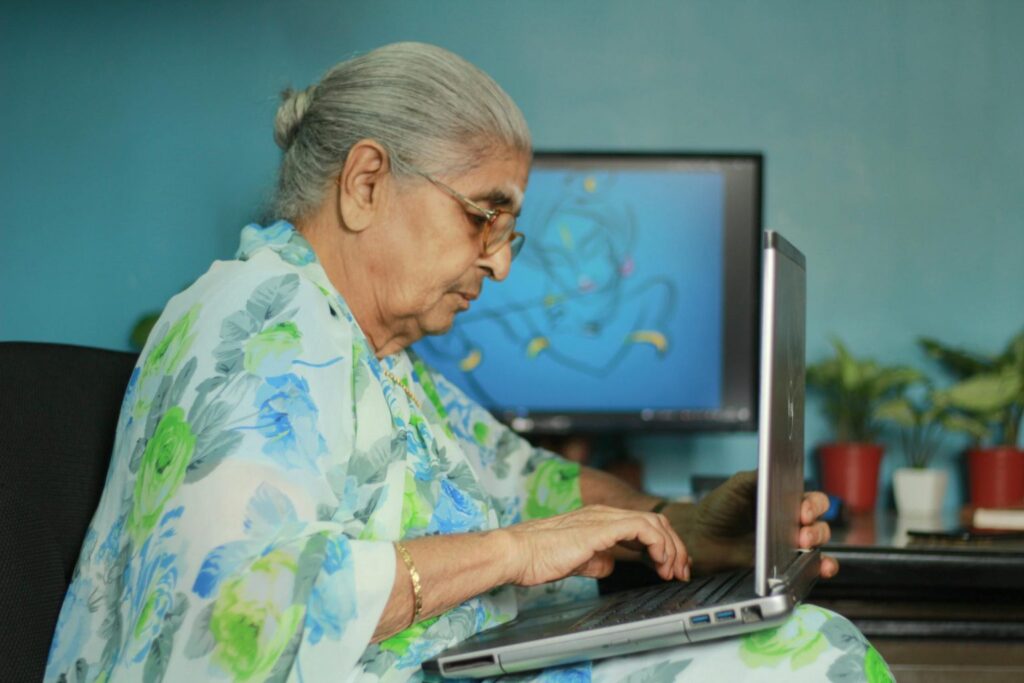
Fathers who once ran businesses, managed teams, or made all family decisions may suddenly feel left behind. Today’s world changes fast—banking apps, digital payments, online bookings, passwords for everything.
For many fathers, this new digital-first universe can feel intimidating.
But they rarely say it aloud. Instead, they quietly withdraw.
They hand over the phone to us to make payments.
They ask us to book tickets online.
They stop handling gadgets they once tried to understand.
What looks like dependence is often hidden anxiety.
We need to reassure them—not by taking over everything, but by guiding them patiently. Let them learn. Let them try. Let them feel capable again.
Their confidence deserves protection as much as their health.
Their Friend Circle Shrinks—and Loneliness Creeps In Quietly
Something heartbreaking happens when fathers age.
Their world becomes smaller.
Friends migrate, fall ill, or become homebound.
Professional networks fade away after retirement.
Daily interactions become rare.
We see fathers spending more time alone—reading the newspaper, watching TV, or sitting quietly on the balcony.
It’s not always because they enjoy silence.
Sometimes, they simply have fewer people to talk to.
For a generation that defined themselves through responsibility and productivity, loneliness can be deeply unsettling, even if they never admit it.
Encouraging them to socialize, join senior groups, attend community activities, or reconnect with old friends can help them feel seen and valued again.
Health Concerns Demand Attention—But They Don’t Want to “Trouble” Anyone
Ask any father if he needs a doctor’s appointment and the answer is almost always:
“No, no… I’m fine.”
But ignoring symptoms is common.
Not wanting to burden the family is even more common.
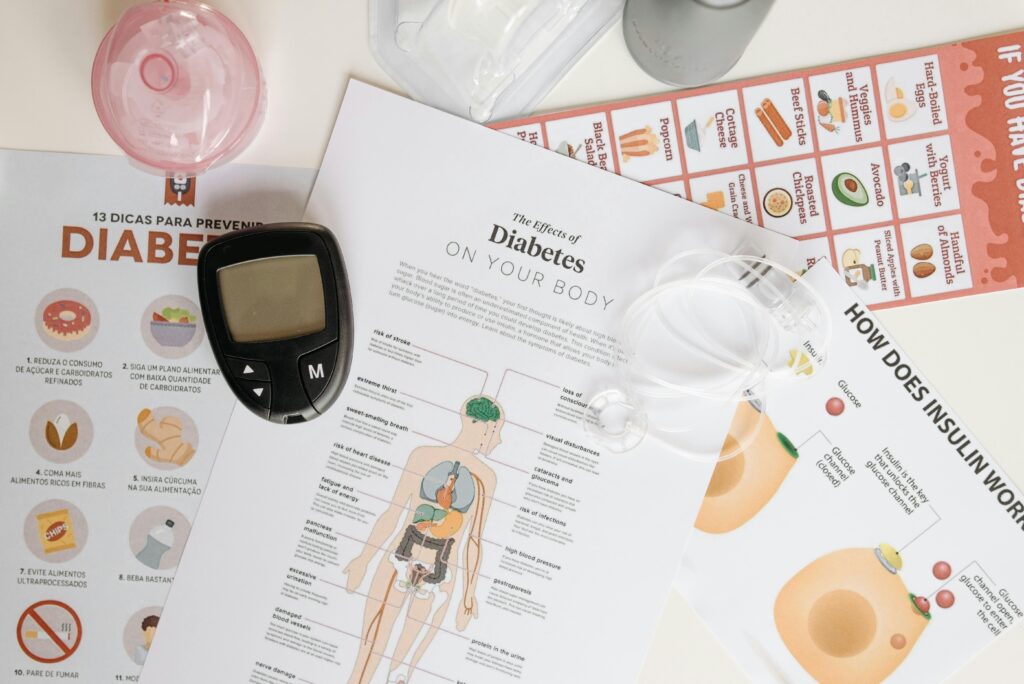
High blood pressure, diabetes, prostate issues, heart risks, poor sleep, knee pain—these often start creeping into their daily life. But fathers have a habit of brushing things aside until they become unavoidable.
This is where we step in—but with sensitivity.
Instead of lecturing, we can join them in check-ups.
Instead of insisting, we can gently encourage.
Instead of worrying silently, we can communicate openly.
Ageing becomes less frightening when someone walks beside them.
Emotions Deepen—Even in Men Who Rarely Expressed Them
Fathers from older generations didn’t grow up in a culture that encouraged emotional expression.
They kept their fears to themselves.
They carried stress quietly.
They rarely cried, even when life pushed them hard.
But ageing softens the emotional walls they grew up with.
They may become nostalgic.
They may worry more.
They may miss relatives and old friends more intensely.
They may feel anxious about the future—ours and theirs.
Suddenly, they share childhood stories, regrets, memories of their parents, and experiences they never spoke of before. Sometimes they reflect more. Sometimes they seek reassurance in silence.
These emotional openings are invitations—not burdens.
Listening with patience during these moments becomes one of the greatest gifts we can give them.
Roles Reverse—And This Transition Is Equally Hard for Them
There’s a moment every adult child experiences:
the shift from being cared for to becoming the caregiver.
For fathers, this reversal can feel unsettling.
They were the ones who paid bills.
They were the ones who solved crises.
They were the ones who protected the family.
Accepting help—from children they once carried on their shoulders—can feel strange, even uncomfortable.
This is why many fathers cling to independence as long as they can.
They want to feel relevant.
They want to feel useful.
They want to feel like they still matter.
And they do—more than ever.
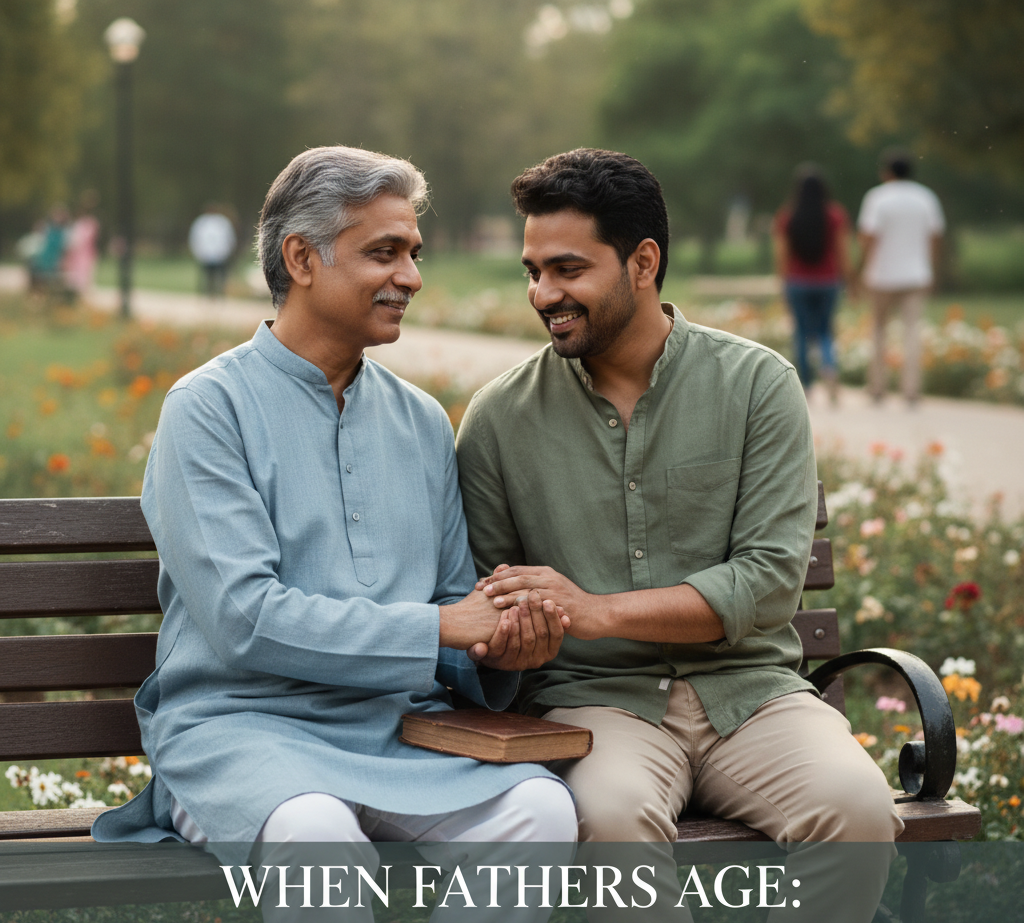
We can make this transition easier by involving them in decisions, valuing their opinions, and assuring them that their presence still anchors the family.
What Fathers Need Most as They Age
Ageing is not just about medicines, tests, or physical health.
For fathers, ageing is deeply emotional.
What they truly need is:
Respect – so they feel valued
Patience – so they never feel like a burden
Time – so they know we’re still their people
Inclusion – so they don’t feel left out
Reassurance – so they feel safe
Warmth – so they feel connected
Conversation – so they don’t retreat into silence
They don’t always ask.
They don’t always express.
But they feel everything.
When fathers age, our love needs to become softer and more intentional.
Ageing Is Not the End—It’s a Different Chapter
If we look closely, ageing brings surprising gifts too.
Fathers become wiser, calmer, and more reflective.
They appreciate small joys more.
They become gentler with grandchildren.
They sometimes pick up old hobbies they never had time for.
They rediscover music, reading, gardening, or faith.
They begin to cherish conversations they once rushed through.
Ageing doesn’t diminish them.
It reveals another side of them—one we may have missed all these years.
All we need to do is slow down and walk with them.
A Gentle Reminder for All of Us
One day, we will stand where our fathers stand today.
And at that time, we will hope our children understand us the way we want to understand them now.
Ageing is not something to fight.
It is something to honour.
And when fathers age, they need us—not because they’re weak, but because they spent a lifetime being strong for us.
This is our time to return that love in the form of care, respect, and presence.
If this reflection resonates with you, we would love to hear your thoughts and experiences. Share this blog with someone who might need it.