We often blame age for poor sleep.
We blame stress, retirement worries, aches, pains, even the weather.
But most of us never think about the one thing that actually has the biggest impact on how well we sleep after 60:
Dinner.
Not just what we eat, but when and how we eat it.
As we age, our digestion naturally slows down. The stomach empties more slowly. Acid levels drop. Metabolism dips.
So that heavy, late-night dinner we’ve always enjoyed? It suddenly becomes the number one culprit behind:
- tossing and turning
- waking up multiple times
- acidity or burning in the chest
- heaviness in the stomach
- waking up tired
- strange dreams
- snoring or breathing issues
- morning headache
Most seniors think this is “just ageing.”
But the truth is much simpler — it’s one dinner mistake almost all of us make without realising it.
Let’s talk about what that mistake is, why it affects sleep so much, and the small changes that can make nights peaceful again.
The Big Dinner Mistake: Eating Heavy, Eating Late
This one pattern ruins sleep more than anything else.
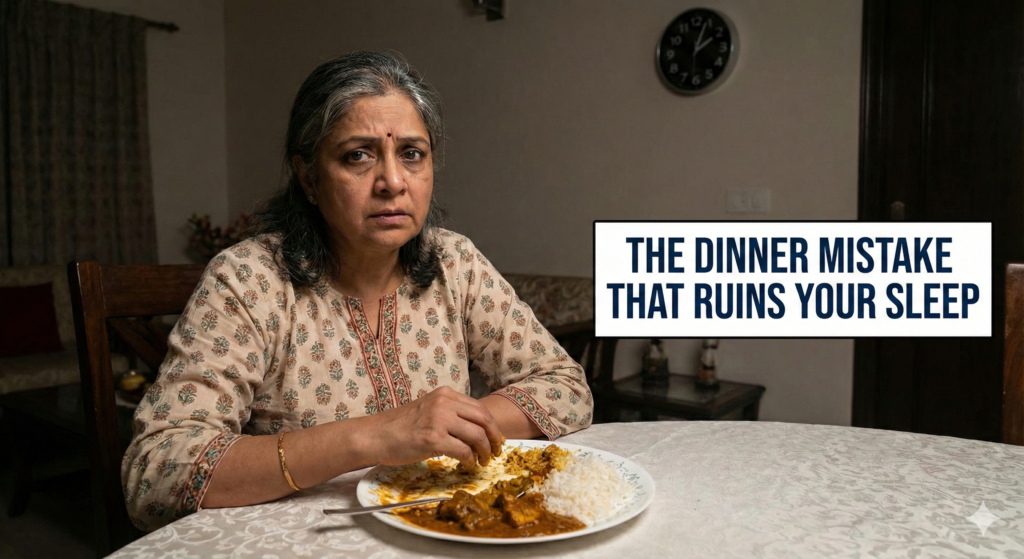
We spend the whole day lightly eating — a simple breakfast, a modest lunch — and then we sit down at night and eat the biggest, richest meal of the day.
And we eat it the latest.
Here’s the problem:
Our bodies don’t want to digest food while we sleep.
They want to repair, restore, and relax.
A heavy dinner pushes the body into emergency mode — the stomach is working overtime when the body wants to shut down.
You can imagine the result.
Why Heavy, Late Dinners Hit Us Harder After 60
The older we get, the more sensitive the system becomes.
1. Digestion slows naturally
Food stays in the stomach longer, especially oily or fried foods.
2. The stomach produces less acid
This makes it harder to break down foods like rice, wheat, or meat at night.
3. Hormones that help with sleep are affected
A full stomach reduces melatonin production — and melatonin is what helps us fall asleep.
4. Lying down pushes acid upward
This is why some seniors feel burning in the throat or chest minutes after going to bed.
5. Heavy dinners affect breathing
A full stomach pushes up on the diaphragm, causing snoring or interrupted breathing.
This is why many seniors wake up tired even after 7–8 hours in bed.
Foods That Especially Disturb Sleep When Eaten at Night
Some foods are simply too heavy for the nighttime digestive system.
These include:
- fried snacks
- parathas
- biryani or pulao
- rajma or chole
- heavy rotis with lots of ghee
- sweets or desserts
- pickles
- red meat
- creamy curries
- paneer dishes
- too much rice
- late-night fruit
- tea or coffee with dinner
Many of these are normal dinner foods in Indian homes — but they can silently disrupt sleep.
So What Should Dinner Look Like After 60?
It doesn’t have to be boring.
It just needs to be light, warm, simple, and cooked.
Here are elder-friendly dinner options that promote deep sleep:
1. Khichdi + ghee
Light, nourishing, and extremely easy on digestion.
2. Dal + soft sabzi + 1–2 light rotis
Comforting and balanced.
3. Moong dal cheela + chutney
High protein, gentle on the system.
4. Vegetable soup + small portion of grains
Warm foods relax the gut — and the mind.
5. Idli + sambar
Fermented foods digest beautifully at night.
6. Dalia or oats with vegetables
Hearty without being heavy.
7. Steamed or sautéed vegetables with curd (at lunch), buttermilk at night
Curd at night doesn’t suit everyone, but buttermilk works well.
The goal is simple:
Your stomach should feel comfortable, not crowded.
The Best Time to Eat Dinner
If we could change just one thing after 60, it would be the timing.
Eating dinner at 7–7:30 pm can improve sleep dramatically.
Even 8 pm is okay.
Anything beyond 9 pm makes digestion struggle.
Some seniors think early dinners will make them hungry at night, but in reality many find the opposite — their sleep deepens and morning hunger resets nicely.
If hunger does hit later, a warm drink (like turmeric milk or plain milk) or a small handful of nuts works beautifully.
What to Avoid Right Before Bed
A few things can disturb sleep even if your dinner was light:
- tea or coffee after 5 pm
- fruit at night
- spicy pickles
- oily leftovers
- sweets
- cold drinks
- large portions
- lying down immediately after dinner
Give your body at least 1–1.5 hours to settle before going to bed.
A slow walk after dinner helps digestion so much that many seniors see improvement within a week.
Sleep After 60 Can Be Beautiful Again
We often accept poor sleep as part of ageing, but it doesn’t have to be that way.
Once we give the body a lighter workload at night, it rewards us with:
- deeper sleep
- fewer bathroom trips
- less acidity
- reduced bloating
- more morning energy
- better mood
- clearer thinking
The secret was never a medicine.
It was dinner.
Small changes like eating early, keeping meals simple, avoiding tea at night, and choosing warm, digested-friendly foods can transform nights from restless to peaceful.
Let’s Talk About Your Evenings
Do you struggle with sleep after dinner?
What foods disturb your nights — and what helps you sleep better?
Share your thoughts below, and feel free to pass this along to someone who deserves a calmer, more restful night.