We’ve all heard someone say, “Be happy, it’s good for your health.”
And we smile politely, thinking it’s just a sweet sentiment — not science.
But what if it is science?
What if happiness does more than lift your mood?
What if it actually strengthens your heart, sharpens your brain, protects your body, and adds years to your life?
More and more research from around the world is confirming what our grandparents always knew:
Happy people really do age better — and often live longer.
Let’s explore the beautiful connection between joy and longevity, especially in our 60s, 70s, and beyond. And let’s understand how we can invite more happiness into our daily life — not by force, but with small shifts that make ageing feel lighter, richer, and more meaningful.
The Happiness–Health Connection: What Science Says
Joy isn’t just an emotion.
Inside the body, happiness behaves like a powerful health booster.
Studies show that people who experience more positive emotions:
- have lower rates of heart disease
- maintain sharper memory
- recover faster from illness
- sleep better
- feel less physical pain
- show stronger immunity
- live longer, healthier lives
Why? Because happiness changes how the body functions — down to the cells.
How Happiness Helps You Live Longer
Let’s look at what happens inside the body when we experience joy, gratitude, laughter, or connection.
1. Happiness Lowers Stress Hormones
Chronic stress floods the body with cortisol — a hormone that increases blood pressure, affects immunity, disrupts sleep, and accelerates ageing.
Positive emotions reduce cortisol.
Lower cortisol = healthier heart, clearer mind, calmer body.
Even five minutes of laughter can reduce stress hormones significantly.
2. Happiness Protects the Heart
When we’re happy, the blood vessels relax, blood pressure stabilises, and the heart beats more efficiently.
Research shows that happy older adults have:
- fewer heart attacks
- lower BP
- better cholesterol profiles
Joy literally improves circulation.
3. Happiness Strengthens the Immune System
Ever wondered why some people rarely fall sick despite being older?
A big reason is emotional wellbeing.
Positive feelings boost the activity of immune cells.
They help the body fight infections, reduce inflammation, and heal faster.
Happiness is not just “good sleep and good food” — it’s also “good immunity.”
4. Happiness Sharpens the Brain
The ageing brain loves joy.
Happiness produces chemicals that enhance:
- memory
- focus
- creativity
- learning
That’s why seniors who stay cheerful and engaged tend to have sharper minds and lower risk of cognitive decline.
Joy acts like fertilizer for the brain.
5. Happiness Reduces Chronic Pain
Pain is not only physical — it is deeply emotional.
Joyful people cope better with pain because happiness increases endorphins, the body’s natural painkillers.
It also reduces inflammation, which is at the root of many age-related aches.
A positive mind doesn’t erase pain, but it makes it more manageable.
6. Happiness Helps You Sleep Better
Sleep and happiness are connected in a beautiful cycle:
- Better mood → better sleep
- Better sleep → clearer mind, better mood
A happy mind rests easier at night.
And rested elders live longer, healthier lives.
7. Happiness Encourages Healthy Habits
People who feel good tend to take good care of themselves.
They:
- walk regularly
- eat better
- stay socially connected
- follow medical advice
- stay mentally active
Joy makes us want to live — and live well.
But Here’s the Most Important Truth:
Happiness after 60 doesn’t fall into our lap. We create it deliberately.
Unlike childhood, where joy is effortless, later life brings losses, health concerns, loneliness, and transitions.
Happiness requires intention.
But the good news?
Even tiny changes can transform your emotional landscape.
Let’s look at how.
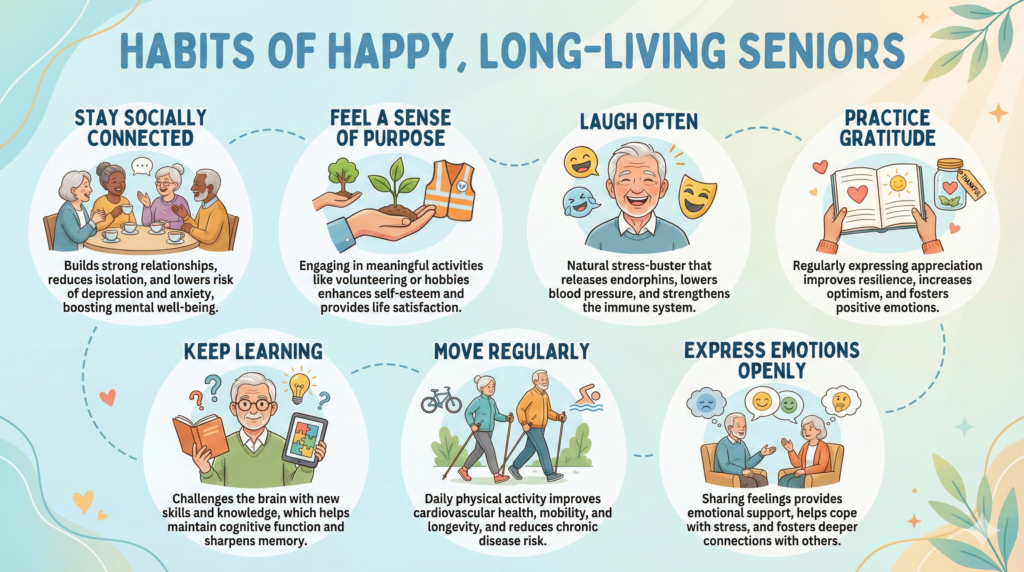
Daily Habits of Happy, Long-Living Seniors
These simple choices protect emotional health — and science shows they protect physical health too.
1. They Stay Socially Connected
Loneliness is as harmful as smoking 15 cigarettes a day.
Connection is healing.
Happy elders stay in touch with:
- friends
- children
- grandchildren
- neighbours
- community groups
Even a 10-minute conversation can lift the heart.
2. They Find Purpose — Big or Small
Purpose makes life meaningful.
It could be:
- caring for plants
- mentoring someone
- volunteering
- creating something
- learning a skill
- supporting family
Purpose keeps the spirit alive — and the brain sharp.
3. They Laugh Often
Not forced laughter, but real laughter — the kind that comes from stories, memories, movies, people we enjoy.
Laughter immediately relaxes the body and boosts immunity.
4. They Practice Gratitude
Gratitude is one of the strongest predictors of emotional wellbeing.
Even noticing three good things each day helps the brain focus on joy instead of fear.
5. They Keep Learning
A curious mind stays young.
Happy seniors read, listen, explore, question, and stay mentally playful.
6. They Move Their Body
Movement releases endorphins — the happiness hormones.
Even gentle walking, yoga, or stretching produces joy.
7. They Don’t Suppress Emotions
They cry when needed, share when needed, and seek support when overwhelmed.
Suppressing emotions ages the body.
Expressing them frees it.
What If Life Has Been Heavy Lately? Can You Still Age Joyfully?
Yes.
Absolutely yes.
Joy isn’t the absence of stress.
Joy is the presence of moments that lift you — even briefly.
A sunset.
A warm cup of chai.
A phone call.
A favourite song.
A walk after dinner.
A small act of kindness.
These moments accumulate and shape how the body and mind age.
Happiness doesn’t need to be big to be powerful.
Joy Doesn’t Just Feel Good — It Heals
When we choose happiness — even in small doses — we choose:
- healthier heart
- sharper mind
- calmer body
- stronger immunity
- deeper relationships
- longer life
Ageing is not only about years passing.
It’s about how the mind and heart respond to those years.
Happiness makes ageing richer, smoother, and far more graceful.
If you’ve discovered habits or people that add joy to your life, we’d love to hear about them. And if this blog touched you, share it with someone who could use a reminder that joy is not a luxury — it’s a powerful tool for healthy ageing.