Mrs. Satyabhama is a 71-year-old stroke survivor who has chosen to share her recovery journey to inspire others. Her story reflects the power of courage, timely medical care, and unwavering family support in rebuilding life after a stroke.
Can you tell us about your childhood? Where did you grow up, and what was life like back then?
I grew up in Chennai, and my childhood was full of fun. My neighbours were a group of girls from an orthodox Brahmin household, and I spent most of my time playing with them.
What were your dreams and aspirations as a young girl?
As a young girl, I wanted to become an accountant. My brother, who was a Flight Lieutenant in the Indian Air Force, inspired me greatly. He was very intelligent and was even selected to join the National Defence Academy at the age of 15.
Who were the people who inspired or influenced you most in your younger days?
My brother had the biggest influence on me. Unfortunately, he died in a MiG plane crash in 1974. His friend supported my family during that difficult time, and his help was invaluable in helping us cope.
How did your journey as a student, professional, and later as a wife/mother shape your identity?
I completed my B.Com, Cost Accounting, and a PG Diploma in Management. I started working in 1976 with Export Credit & Guarantee Corporation, moved to Indian Bank in 1977, and in 1978 joined CMC Ltd, where I worked for 12 years. Later, I became an independent IT specialist, working with large multinational banks like Citibank and others.
You’ve mentioned being a busy corporate executive and traveling — what did that phase of your life mean to you?
It was a very busy but exciting phase. Banks were shifting to computerisation, and I felt proud to contribute to that transformation. As a Principal Consultant with Think Soft Pvt Ltd, I travelled extensively across Europe, UK and the USA, which gave me tremendous exposure and confidence.
Can you share a memory of a proud moment in your work or family life before the stroke?
After retirement, developing a small organic farm and growing various vegetables gave me a great sense of satisfaction. It reconnected me with nature and brought me joy.
When did you first realize something was wrong with your health?
When I was 65, I began experiencing health issues and was advised to undergo heart surgery.
How did you feel emotionally when the doctors told you about your heart condition and later the stroke?
I agreed to undergo heart surgery, which was completed on October 31, 2019. Unfortunately, the next day I had a mild stroke. I felt shocked and devastated when I lost my memory and was in a daze. I could hardly read or write, and it was emotionally overwhelming.
What was going through your mind during those first days in the hospital?
During the first week, I felt like I was in a trance. I couldn’t understand what was happening to me, and everything felt confusing and unreal.
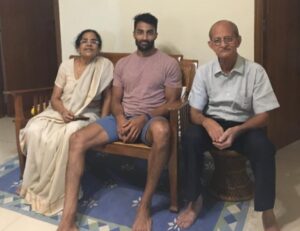
How did your family — your husband, children, or siblings — support you during that difficult period?
My sister, children and husband were incredibly supportive. For six months, they helped me with physiotherapy. They helped me read, write and repeat basic details every day. Their encouragement slowly helped me overcome my fear and feel safe.
What were the biggest challenges you faced after the stroke — physically, emotionally, and socially?
My biggest challenge was my memory. I struggled to remember my place of residence and daily activities. I also had severe pain on the right side of my body and couldn’t do normal tasks. Emotionally, I felt depressed and found it difficult to gather the strength to move each day.
How did you keep your courage alive through pain and setbacks?
My recovery started slowly. My husband helped me with exercises every day, and my children called me regularly. Gradually, I regained confidence and even began going for morning walks.
Can you describe a moment in your recovery when you felt, “Yes, I can do this”?
The moment I stepped out for a morning walk and later began attending public functions on my own, I felt a strong sense of independence returning.
What was your support system during recovery?
My biggest support was my husband, children and my sister, who is a doctor. Listening to Vedanta lectures and doing physiotherapy every day also helped me regain balance and clarity.
You have also spoken about a deeply personal moment that came much later in your life. Could you share what happened on the day your husband passed away, and how that experience shaped you afterward?
On January 14, 2023, my husband and I spent the day at our farm with Swami Guruparananda. We invited him to come home for lunch. After returning, my husband made the call to Swamiji and then suddenly felt uneasy. He lay down on the bed, collapsed, and passed away just as Swamiji entered the house. He died holding Swamiji’s hand.
His passing left me very lonely, but I kept reminding myself of the strength he had given me during my stroke recovery. That memory helped me decide to continue living the rest of my life cheerfully. I am grateful to have recovered 99% from my stroke.
How has your outlook on life changed since the stroke?
Initially, my outlook was very negative. But over time, with support, I regained confidence. I realised that attachment to things is meaningless and that a quiet, peaceful life is best.
What new skills or habits have you developed to stay independent?
I learned to attend public functions on my own, organise my daily activities and keep myself physically active. Listening to Vedantic teachings became a regular part of my day.
How do you spend your days now, and what gives you joy?
I spend my time listening to Vedanta lectures and managing my day independently. Meeting and chatting with friends used to give me great joy, and I still cherish those moments.
What do you miss the most from your pre-stroke life, and what have you discovered about yourself after the stroke?
I miss the ease of meeting friends and talking freely. Through this journey, I discovered that simplicity and quiet living bring a lot of peace.
What advice would you give to other stroke survivors who may be feeling hopeless?
Be strong. Spend time doing exercises and try to manage as many activities as possible by yourself. Never allow yourself to feel helpless. Your own effort is the key.
What message do you want to share with younger generations about health, resilience, and aging?
Young people should learn about stroke and support those affected. Stroke often occurs without warning. It is important to build resilience and learn to manage life independently.
If you could describe your journey in one word or phrase, what would it be?
Resilience.
I believe one must thank every moment of life, because gratitude brings strength and happiness.