Indian sweets are not just food.
They are memories.
They are celebrations.
They are the taste of home.
Whether it is a hot gulab jamun on a winter evening, a plate of payasam during festivals, or that one small piece of barfi we sneak after dinner, sweets bring comfort to all of us. And as we grow older, the connection becomes even deeper. Food reminds us of people we love, moments we cherish, and traditions we want to keep alive.
But there’s a worry many of us face: “How do we enjoy sweets without sending our sugar levels on a ride?”
Especially for older adults or those living with diabetes, this becomes a daily balancing act—enjoying life while taking care of health.
The good news?
We can enjoy sweets.
We just need to do it smartly.
Let’s walk through some simple, practical ways to enjoy Indian sweets without spiking our sugar—thoughtfully, guilt-free, and joyfully.
1. Pick the Right Kind of Sweet
Not all sweets behave the same way in our bodies. Some shoot up blood sugar quickly, while others are gentler.
We can start by choosing sweets that have:
- Less syrup
- More nuts or protein
- Lower refined sugar
- Fewer deep-fried elements
Some better options include:
- Dry fruit barfis (in small amounts)
- Roasted gram laddu
- Coconut barfi
- Til chikki
- Besan barfi (not besan ladoo loaded with ghee)
Sweets that hit sugar levels harder include:
- Jalebi
- Gulab jamun
- Rasgulla
- Malpua
- Mysore pak
- Halwas loaded with sugar and ghee
We do not have to ban them. We only have to be mindful of frequency and portion.
2. Choose Small Portions—The Most Powerful Trick of All
Most of us don’t need a full bowl of kheer or two gulab jamuns.
We only need a taste.
A small piece can fully satisfy a craving, especially if we eat slowly.
So instead of saying, “No sweets at all,” we can say:
- “I’ll take just half.”
- “A small piece is enough for me.”
This small behaviour change reduces the sugar load by half without removing joy.
3. Pair Your Sweet With the Right Foods
Eating a sweet on an empty stomach is like opening the floodgates for a sugar spike.
But if we eat the same sweet after a proper meal, the spike becomes much smaller because:
- Protein slows down sugar absorption
- Fibre delays digestion
- Healthy fats keep sugar levels stable
So the best time to enjoy a sweet is:
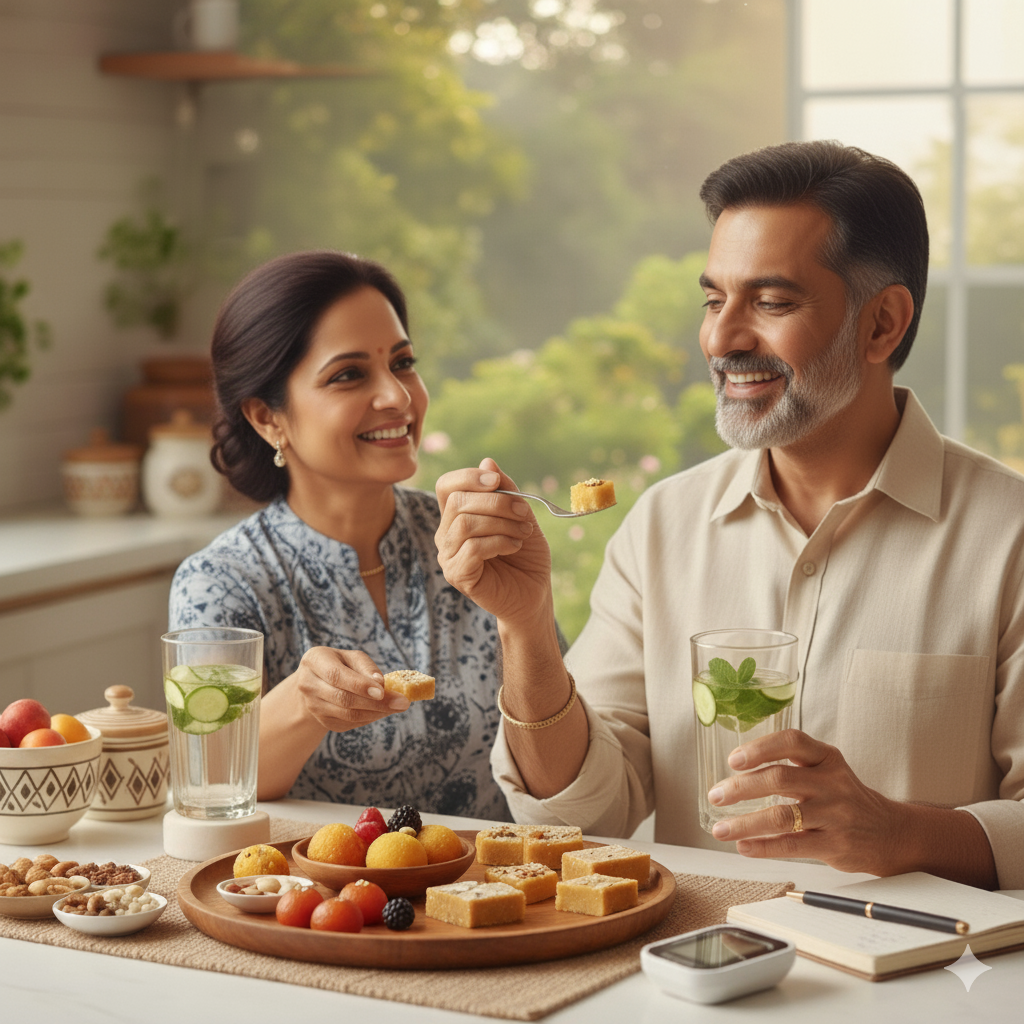
After lunch or dinner.
And not:
- early morning
- evening on an empty stomach
- as a “quick bite”
Pairing sweets with:
- nuts
- a glass of warm milk
- fruits
- a handful of roasted chana
can also help slow down sugar release.
4. Swap Ingredients Without Losing the Festive Feeling
We can enjoy sweets with healthier twists. Many Indian homes already do this without realising it.
Some simple swaps:
- Replace white sugar with jaggery (note: jaggery also raises sugar but usually slower)
- Use ragi, millets, or oats instead of refined flour
- Replace half the sugar with dates
- Add nuts, seeds, or chickpea flour for protein
- Use low-fat milk instead of full cream
- Reduce ghee to half or three-fourths
Even with these swaps, sweets will still contain calories, but they become gentler on sugar levels.
5. Try Healthier Homemade Versions
When we prepare sweets at home, we control everything:
- how much sugar
- how much ghee
- what ingredients go in
- how big the portions are
Some simple, blood-sugar-friendly homemade sweets:
- Dates and nuts ladoo (no sugar at all)
- Coconut dates balls
- Besan barfi with less ghee and jaggery
- Ragi laddu
- Oats kheer with jaggery
- Semolina halwa with half the sugar
Festivals become even more special because we made something with our own hands.
6. Don’t Combine Multiple High-Sugar Foods
We all know how festive days go—first a plate of biryani, then some fried snacks, and finally sweets.
This combination sends sugar levels soaring.
If we are planning to enjoy a sweet, we can keep the rest of the meal simpler:
- Avoid sweetened beverages
- Go light on rice or roti
- Avoid deep-fried food
This keeps the overall sugar load manageable.
7. Drink Water Before and After Sweets
Hydration helps digestion and reduces cravings.
Sometimes we reach for a sweet even when we are just thirsty.
A glass of water:
- before eating
- and again after eating
helps our body process sugar better and keeps us from overeating.
8. Add Gentle Movement After Eating
We do not need a full workout.
Even 10–20 minutes of slow walking helps muscles use up the extra sugar in our blood.
This one small action:
- reduces the sugar spike
- helps digestion
- prevents sluggishness
- keeps energy levels stable
An evening walk with family, or even walking inside the house, can make a big difference.
9. Watch Out for “Hidden Sugars”
Many foods look innocent but are secretly high in sugar:
- packaged biscuits
- sweetened cornflakes
- flavoured yogurt
- bottled fruit juices
- store-bought kheer mixes
- packaged chikkis loaded with glucose syrup
If we are eating sweets occasionally, we should reduce hidden sugars elsewhere.
It gives us more room to enjoy the treats we actually love.
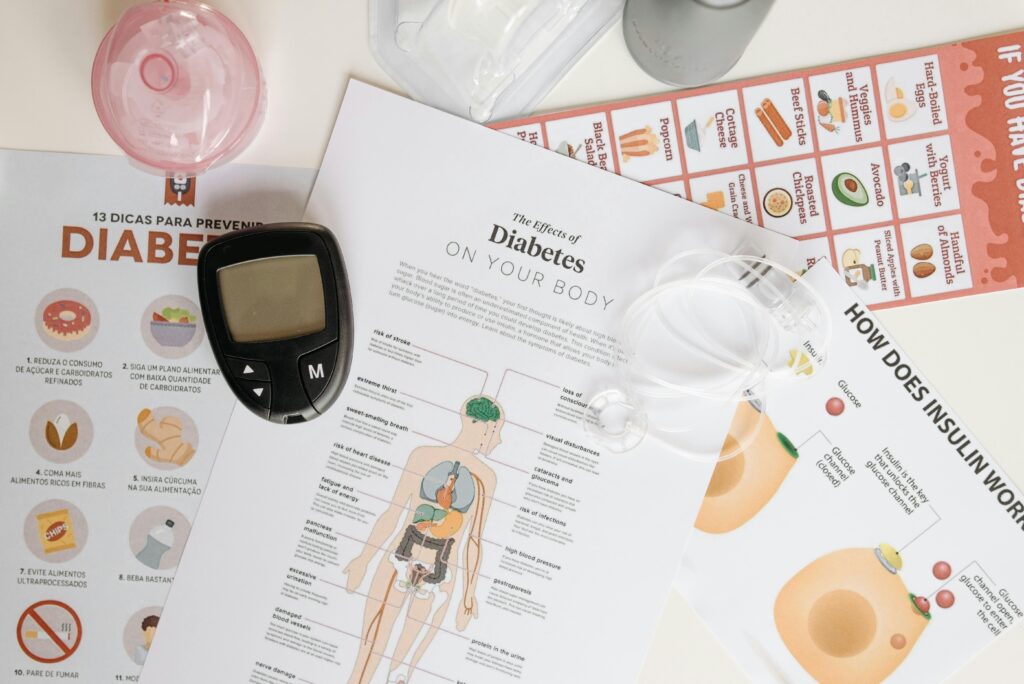
10. Check Your Sugar Levels Regularly
The goal is not to fear sweets.
The goal is to understand how our body responds.
Some of us might see a spike even with small amounts, while others may tolerate sweets a bit better.
Regular monitoring helps us personalise our choices.
Checking sugar after a sweet tells us:
- which sweets work for us
- how much is safe
- what time of the day is better
- how movement affects our readings
We don’t have to restrict blindly. We just have to understand our body better.
11. Stay Mindful During Festivals and Functions
Festivals bring together family, food, and joy—and sugar everywhere.
A few smart choices can keep us safe:
- Choose one sweet, not three
- Eat sweets after a meal, never before
- Share a plate with someone
- Take small bites, eat slowly
- Have herbal tea or warm water later
- Walk after the celebration
Festivals should be about people, not plates.
12. Don’t Punish Yourself for Enjoying a Sweet
Sometimes we enjoy a ladoo at a cousin’s home and then feel guilty.
Guilt is unnecessary.
Panic is unnecessary.
Shame is unnecessary.
Life is about balance, not perfection.
Instead of worrying, we can:
- drink enough water
- walk for 20 minutes
- eat a lighter next meal
Health works over weeks and months, not one dessert.
13. Remember the Bigger Picture
Enjoying sweets is not the problem.
Overdoing sweets is the problem.
If most of our daily meals are healthy and balanced, a small sweet here and there won’t harm us.
A balanced lifestyle means:
- mindful eating
- regular walking
- staying hydrated
- sleeping well
- keeping stress in check
These habits matter far more than the occasional gulab jamun.
Final Thoughts
Sweets are woven into our culture, our memories, and our celebrations. And we do not have to give them up, even if we are careful about sugar levels. With small changes, mindful choices, and a little planning, we can enjoy the taste we love without harming our health.
We can enjoy Indian sweets—slowly, gently, and with joy.
If you found these tips helpful, we would love to hear your thoughts.
Do share your experiences, your family recipes, or the little tricks that help you manage sugar while still enjoying your favourite treats. And if you feel this might help someone you care about, please pass it along.