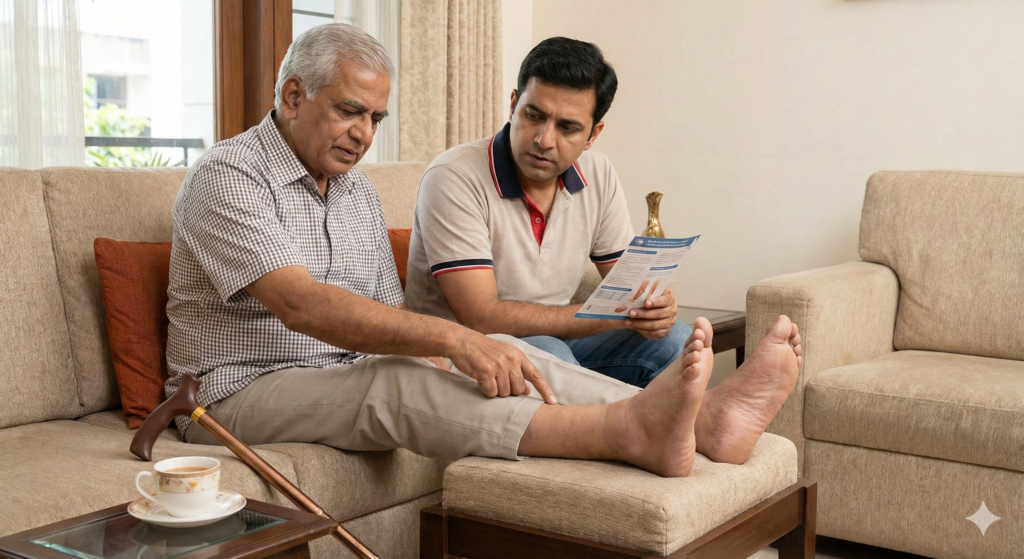
Leg swelling is one of the most common complaints among older adults. Some days the slippers feel tight. Some evenings the feet look puffier than they did in the morning. Sometimes we notice marks from socks or sandals staying on the skin for hours.
And the first thought that comes to mind is:
“Maybe it’s just age.”
But swelling in the legs is not always “just age.”
Sometimes it’s harmless.
Sometimes it’s your body asking for rest.
And sometimes, it’s a quiet warning sign that deserves attention.
Let’s talk honestly, calmly, and clearly about why swelling happens, what’s normal, what’s not, and when elders should consider it a sign to check in with a doctor.
Why Do Legs Swell After 60?
As we grow older, the body changes in small but meaningful ways. Blood circulation slows a little. Muscles lose strength. Valves in the leg veins weaken. Fluids shift more easily into the feet and ankles.
Because of these changes, many elders experience mild swelling — especially after a long day of sitting or standing.
But not all swelling is the same.
Understanding the difference helps us decide when to relax… and when to be cautious.
The Harmless Type of Swelling
Let’s start with the swelling that usually isn’t dangerous. This type:
- comes gradually
- gets worse by evening
- improves overnight
- feels soft
- leaves a dent when pressed
- appears on both legs equally
This kind of swelling is common in elders who:
- sit for long hours
- stand for long periods
- travel often
- drink little water
- eat salty food
- take certain medicines (for BP, diabetes, pain, etc.)
Mild fluid buildup can be managed with small lifestyle changes — and it’s usually nothing to panic about.
But swelling that behaves differently requires attention.
The Warning Sign Type of Swelling
This is swelling that comes with other symptoms or shows up in a way that feels unusual.
Here are red flags elders should never ignore:
1. Sudden swelling in one leg
If one leg becomes swollen quickly while the other looks normal, it can sometimes indicate a blood clot. This needs medical attention.
2. Swelling along with breathlessness
If legs are swollen and breathing feels harder or you feel breathless while lying flat, it may be a sign of heart-related changes.
3. Swelling that doesn’t go down overnight
If your feet look the same in the morning as they did at night, your body may be retaining more fluid than usual.
4. Swelling with chest discomfort or fatigue
This combination needs checking, especially for seniors.
5. Swelling that is hard, warm, or painful
Infection, inflammation, or a clot can cause painful swelling.
6. Swelling with sudden weight gain
A quick jump in weight may mean the body is retaining fluid internally.
7. Swelling along with very low urine output
Kidneys play a major role in fluid balance. Changes here are worth noticing.
8. Swelling with shiny, stretched skin
This could mean the fluid buildup is significant.
If any of these appear, it’s not “just age.” It’s a sign your body needs medical attention.
Common Causes of Leg Swelling in Elders
Understanding the cause helps us respond better. Here are the most common reasons:
1. Long Sitting Hours
Many elders spend long stretches in chairs or sofas. When the legs stay down, blood pools in the lower body.
2. Weak Leg Veins (Venous Insufficiency)
With age, the valves in our leg veins weaken, making it harder for blood to return upward. This causes heaviness, swelling, and sometimes visible veins.
3. Heart Function Changes
The heart pumps fluids around the body. Any reduction in heart strength can lead to swelling, especially around the ankles.
4. Kidney Function Changes
Kidneys regulate fluids. When they slow down, fluid builds up in legs and feet.
5. Low Protein Levels
Seniors who eat very little protein often experience swelling, because low protein causes fluid to leak into tissues.
6. Thyroid Issues
Both low and high thyroid levels can cause puffiness in the legs and face.
7. Medication Side Effects
Many medicines taken by elders — especially BP medicines, diabetes medicines, steroid tablets, and painkillers — can cause swelling.
8. Arthritis
Certain types of arthritis cause swelling around the knee or ankle joints.
9. Infections
If one leg suddenly becomes red, hot, and swollen, it may be an infection.
What Elders Can Do to Reduce Swelling
The good news is that everyday habits can make a big difference.
1. Elevate the Legs
Raising the legs on a pillow for 15–20 minutes reduces swelling beautifully. It helps the blood flow back toward the heart.
2. Move Every 45 Minutes
Simple movements — ankle rotations, short walks, gentle stretching — improve circulation.
3. Reduce Salt Intake
Salt holds water in the body. Cutting down on pickles, papads, chips, and packaged snacks helps.
4. Drink Enough Water
Dehydration actually worsens swelling because the body holds on to fluid.
5. Wear Comfortable Footwear
Avoid tight straps and hard soles.
6. Keep Blood Sugar and BP Under Control
Stable levels reduce fluid retention and support heart health.
7. Support the Feet at Night
A small rolled towel under the ankles keeps swelling down.
8. Avoid Sitting With Feet Hanging for Too Long
Feet should ideally rest on a small stool or footrest.
9. Talk to Your Doctor About Your Medicines
Simple adjustments in dosage can sometimes reduce swelling.
10. Use Compression Stockings, If Advised
These help push fluid upward, reducing heaviness and swelling.
When Swelling Is Not Dangerous — But Still Important
Even harmless swelling shouldn’t be ignored completely.
It tells us something about circulation, hydration, and overall health.
Taking it seriously helps prevent bigger issues later.
And even mild swelling reduces quality of life:
- sandals don’t fit
- legs feel heavy
- walking becomes tiring
So managing it early keeps mobility and comfort intact.
Your Body Speaks — Swelling Is One of Its Voices
Swelling is not always a problem. But it is always a message.
A message about:
- circulation
- heart health
- kidney function
- diet
- movement
- medication
- hydration
Listening to these signals keeps us safer and more comfortable as we grow older.
Let’s Talk About Your Experience
Have you noticed swelling in your feet or legs recently? Does it change through the day?
Share your experience — your story may help someone else understand their body better. And if you think a loved one might benefit from this, please share it with them too.